"THE BLACKER THE BERRY THE SWEETER THE JUICE/
I SAY THE DARKER THE FLESH,THEN THE DEEPER THE ROOTS!" ---TUPAC
Showing posts with label DARK SKINNED BEAUTIES. Show all posts

Friday, July 10, 2015

SERENA WINS!====BLACK SKINNED BEAUTY KNOCKS IT OUT!-FROM AUTUM ASHANTE ON FACEBOOK!

FROM AUTUM ASHANTE ON FACEBOOK

Remember white people...without your systems of oppression and when you are forced to play fair...u aint shit.
“Remember white people...without your systems of oppression and when you are forced to play fair...u aint shit.”
twitter.com|By Gazi Kodzo

Friday, June 20, 2014

BLACK PEOPLE! -THIS BLACK SKINNED BEAUTY WAS ASKED TO COVER UP NEXT TIME BUT BLEACHING RIHANNA ATI ANY SKINNY white girl can expose herself for nothing ati nothing but PRAISE!-FROM POLITICS FROM THE EYES OF A EBONY MOM.WORDPRESS.COM

from theeyesofaebonymom.wordpress.com

((((((((((((((((((((((((((((((((((((((((((((((((((((((((((((((((((((((((((((((((((((((((((((((((((((((((((((((((((((((((((((((((((((((
from cnn.com

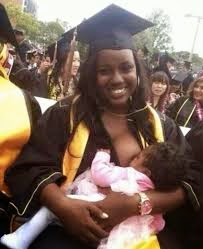
Graduation photo shows 'Black Women Do Breastfeed'

updated 7:26 PM EDT, Wed June 11, 2014
Your video will begin momentarily.
STORY HIGHLIGHTS
  • A photo of a woman nursing at her college graduation got spread on social media
  • The picture was shared from Facebook group "Black Women Do Breastfeed"
  • The group's founder says their images encourage more black women to breast-feed
(CNN) -- The Facebook page "Black Women Do Breastfeed" has existed since 2010 with a modest audience of some 2,000 people who follow it for news and conversations along with the occasional encouraging image of a breast-feeding mother.
Over the weekend, the page shared a picture of a woman breast-feeding at her graduation, prompting a chorus of social media cheers and jeers. While much of the reaction has focused on whether the picture is appropriate, the women behind "Black Women Do Breastfeed" say its message is lost in the social media chatter.
"It's important for black women to see other black women breast-feeding," said Nicole Sandiford, who started "Black Women Do Breastfeed" in 2010 as a blog and Facebook group. "Seeing other black women breast-feeding provides a sense of broad community and support for those who are trying to do it."
If that sounds weird to you, look no further than a recent post on the Facebook page asking, "If someone tried to talk you out of breast-feeding, what were their reasons?" Comments vary from, "My mom said that's what poor people did in the old days" to "You won't make enough milk" or "It's something that white people do."
That wasn't Sandiford's experience growing up in a black family outside of the United States, where it wasn't unusual to see women breast-feed openly in public. She remembers seeing her mother breast-feed her sister and knew that one day she, too, would breast-feed her children.
Server responds to breast-feeding
When she turned to the Internet in 2009 for support after her son's birth, she noticed that most images and personal stories did not include black women. Or, when conversations included black women, they focused on how they breast-feed at lower rates than other racial groups.
"I said to myself, 'Hmm, we seem to be missing from this broader conversation,' " said Sandiford, a married mother of two in Charlotte, North Carolina.
"But, as I went through my life, I knew black women who were breast-feeding, including me. I thought one thing I can do to broaden the conversation is collect stories of black women who are breast-feeding."
Georgia mother Shlonda Smith also breast-fed her five children, but somewhere along the way, a friend said to her "you're the only black women I know who breast-feeds," remember Smith, who joined "Black Women Do Breastfeed" as a co-administrator in late 2013.
"It became important to me to see other black women breast-feed and make it visible that yes, black women do breast-feed," Smith said.
On the Facebook page, links to news articles and studies garnered a few likes here and there, but things took a turn a few weeks ago when Smith posted an image of a woman breast-feeding. More women sent pictures for Smith to post and engagement increased, hitting a high with a split image of a woman breast-feeding alongside a picture of pop star Rihanna in a see-through dress. It included the caption, "Why is it OK for a star to wear this but for me to breastfeed it's a problem."
Karlesha Thurman decided to post the photo of herself breast-feeding her child while wearing her graduation cap and gown in the comments of that photo. It immediately got more attention than any other post ever on the page, Smith said, who could relate to being a young mom finishing college.
"It was just beautiful; it just spoke volumes," Smith said. "Breast-feeding is tough at the beginning, so to see a young mom who balanced breast-feeding and school, that's amazing."
But on social media and in other areas, Thurman saw some backlash. Smith offered to take the photo down, but Thurman refused.
"I found out I was pregnant my last year of college, had my daughter one week into my last semester, she was my motivation to keep going, so me receiving my BA was OUR moment," Thurman said, according to a post on the page.
"Black Women Do Breastfeed" also received negative comments about its name and its focus on black women. It also received new support -- the audience climbed to more than 7,000 by Wednesday afternoon.
Stay in touch!
Don't miss out on the conversation we're having at CNN Living. Follow us on Twitter and Facebook for the latest stories and tell us what's influencing your life.
Sandiford spoke with CNN about breast-feeding, race and how "Black Women Do Breastfeed" has grown to accommodate a diverse audience.
The following interview has been edited for brevity and clarity:
CNN: Why is the group named "Black Women Do Breastfeed"?
Sandiford: I named it "Black Women Do Breastfeed" so that people could be aware that there is community of black women who do breast-feed and who are interested in breast-feeding and want to share their experiences. One of the things I used to do when I was looking online for information about breast-feeding is put in search "black women breast-feed," and I figured if I named it something like that, it would come up in searches.
The name is not there to exclude anyone because from the very start, we've had women and men of varying races express interest in being on the page, but black women need advocacy in this area as well. That doesn't exclude women from joining the advocacy, it just recenters the conversation.
In addition to making black women breast-feeding more visible, we've made women who felt like they were the only ones doing it realize they're not alone. We made women who may not have previously breast-fed their children see this community of women.
There are women in this country who may be the first generation in their family to breast-feed. They may be the only women in their community who breast-feed, and that makes it difficult to find support.
CNN: How does sharing pictures of women breast-feeding contribute to this goal?
Sandiford: In the U.S., even though we do have breast-feeding, it's not seen as a common thing. It's not really something you necessarily see walking down the street. For black women who don't know other women who breast-feed in their community, it is important to see that is happening.
CNN: Why do you think this image went viral?
Sandiford: I think people were impressed that this young woman was able to graduate while taking care of a young infant. Because people are not used to seeing breast-feeding in public in this country, we tend to get really nervous or scared or unsure or outright offended because many of us are not used to seeing breasts in that context.
But, I think it's important that photos like this are out there because women need to be able to breast-feed their babies and sometimes it needs to happen in public. Babies need to eat, and they can't control other people's feelings. I think it's important that people remember this is about feeding a baby, and we as nation need to figure out how to manage our own personal feelings and allow women and babies to breast-feed as they need to.
CNN: How have you handled the reaction on your page?
Sandiford: When it comes to social media, you will always see detractors, you will always see people who disagree. But I think it's good to remember that for each of those detractors, there are more people saying 'We support her, and we don't see anything wrong with this.'
We've been very heartened by the positive comments we've seen, and we've definitely seen a lot more positive than negative ones. For us, we've tried not to fan the flames because we don't want to contribute to any harm that might come, and we certainly hope there isn't any so we're trying to be a little bit more low-key.
We are assessing how we want to manage pictures in the future. We don't want to discourage anyone who has pictures they want to share from doing so, but right now, our main concern is that women featured in pictures won't fear any harm from sharing them.
CNN: Do you think the reaction would've been different if a white woman had appeared in the picture?
Sandiford: It's really hard for me to say, but I think that maybe certain assumptions might not have been made if the person in the picture was not black because we've had people questioning her devotion to her studies, questioning her lifestyle and just making slanderous comments.
It's really difficult to say, but I do think the reaction might have been a little different.
As a new parent, did you feel encouraged to breastfeed -- or discouraged? Share your experience in the comments, on Twitter @CNNLiving with the hashtag #CNNparents or on CNN Living's Facebook page.

Monday, May 5, 2014

BLACK BEAUTY!-TRUE BLACK BEAUTY! -GABOUREY SIDIBE- OUR BLACK SKINNED BEAUTY CRIED HER HEART OUT! --FROM VULTURE.COM

FROM VULTURE.COM

GABOUREY SIDIBE-OUR BLACK SKINNED BEAUTY CRIED HER HEART OUT! --FROM VULTURE.COM


OUR BLACK SKINNED BEAUTY LOOKS MUCH BETTER THAN THIS PALE-ASS-SKINNY-WHITE-GIRL!


Last night's Gloria Awards and Gala, hosted by the Ms. Foundation for Women at Cipriani 42nd Street, doubled as a public 80th birthday party for the great Gloria Steinem, meaning that things got extra festive. In addition to the awards (given to Marissa Nuncio, director of the Garment Worker Center in Los Angeles, and Cathy Raphael, the outgoing chair of the Ms. Foundation board), there were speeches from Chelsea Handler, Amy Schumer, and Gabourey Sidibe, among others. (Also: a cake.) Sidibe's long, wonderful speech — about baking cookies, confidence, and feminism — is transcribed in full below. It is worth your time! (And be sure to check out Amy Schumer's great speech from the same event when you're done.)
I'm so excited to be here. Really, really excited. Okay, I'll get to it. Hi. One of the first things people usually ask me is, "Gabourey, how are you so confident?" I hate that. I always wonder if that's the first thing they ask Rihanna when they meet her. "RiRi! How are you so confident?" Nope. No. No. But me? They ask me with that same incredulous disbelief every single time. "You seem so confident! How is that?"
 
When I was ten years, in the fifth grade, my teacher, Miss Lowe had announced that my class would be having a holiday party right before the Christmas break. She asked if we all could all bring snacks or soda or juice to the class party. She also said we had the option of cooking something, if we like. I was so excited. I immediately decided that I would make gingerbread cookies, and that everyone would love them. I told my mom my plan, and I asked her for money to go buy the ingredients. She thought I should just buy store-bought cookies, but I told her, "Those cookies didn't have enough love in them!" I had to make the cookies. So I bought the mix, and I bought cookie cutters in the shape of Christmas trees and bells, and I made a practice batch of cookies that went horribly wrong. Good thing they were a practice batch. They were awful. And then the night before the party, I made another batch of cookies. And they were also awful, but they looked a lot better. I carefully put the cookies in a Ziplock bag, so I could take them to school the next day. When I got to school that morning, I could not wait until that party. And I was so proud of those cookies, and all the effort I put into making them, I started to think that maybe I wouldn't just be the first woman black President — maybe I would also be a celebrity chef! I mean, why limit myself?
 
The party was set to take place during the last hour of school, and I waited excitedly for it all day long. Finally, it was party time. My teacher asked what everyone brought, and I proudly announced that I had baked cookies for the class. I think I felt prouder knowing that everyone else just bought stuff. I was the only one who made anything, because clearly, I'm a little more clever than anyone else. So as the party starts up, I walk around the class, proudly offering cookies to everyone. No one took a cookie. No one. No one except Nicholas, who was the first person I offered one to. But after a few of our other classmates set him straight, he actually caught up with me as I walked around the class, and gave the cookie back. I walked around the class trying to hand out cookies to my class, until I ended up back at my desk with the same amount of cookies that I started with. I sat at my desk alone, eating those gross gingerbread cookies that took hours to make, all by myself. I put chocolate chips in them, that's why they were gross. I wasn't surprised. I just forgot for a moment that my entire class hated me. I had zero friends from the fourth grade to the sixth grade. Who the hell was I baking cookies for? I really got so excited to bake that I had forgotten that everyone hated my guts. Why didn't they like me? I was fat, yes. I had darker skin and weird hair, yes. But the truth is, this isn't a story about bulling, or color, or weight. They hated me because... I was an asshole!
 
Yep. I was a bossy, bossy asshole. See, remember when I said that I thought I was more clever than everyone else? Well, I did! And I told them that — every single day! Those kids couldn't get a word in edgewise, without me cutting them off to remind them that I was smarter, funnier, and all around wittier than them. I was always sarcastic — I called it my birth defect. And let's face it, kids don't get sarcasm. They don't appreciate it. They never knew what I was talking about. And when they would say, "Wait... huh?" I would say, "My God, Alicia, read a book!" I know. I spoke differently than them, I just did. I sounded more like a Valley Girl than a Brooklyn girl. My classmates always asked me if I was adopted by white people. I'd say, "No. Both my parents went to college." I know that was rude, but I'm still really proud of that. To be fair, in my neighborhood, not everyone's parents had the opportunity to go to college. Most of my classmates' parents were teens when they had them. My parents had me at age 30. My father was born in Senegal. His father was the mayor of the capital city, Dakar, and my dad often took my brother and I back home with him to visit Africa, while most of my classmates had never stepped out of the Lower East Side. My mother was a teacher in high school, that's why I went there, but my mom also had a voice, so when I was nine, she quit her teaching job to go sing in the subway. She actually made more money as a singer for tips than she made as a teacher! I know! And she was quickly becoming the underground version of Whitney Houston. She was the strongest, smartest, and most talented person I had ever known. Even today, I don't want to grow up to be anyone as much as I want to grow up to be her. I know!
 
The point is, I was a snob. I thought I was better than the kids in my class, and I let them know it. That's why they didn't like me. I think the reason I thought so highly of myself all the time was because no one else ever did. I figured out I was smart because my mother would yell at my older brother. She'd say, "Your little sister is going to pass you in school. You're going to get left behind and she's going to graduate before you." But she never said to me, "You are smart." What she did say was, "You are too fat." I got the message that I wasn't pretty, and I probably wasn't normal, but I was smart! Why wouldn't they just say that? "You're smart." It's actually not that hard. My dad would yell at my brother, "Gabourey does her homework by herself! Why can't you?" But he never said to me, "Good job." What he did say was, "You need to lose weight so I can be proud of you." I know. So I got made fun of at school, I got made fun of at home too, my older brother hated me, my dad just didn't understand me, and my mom, who had been a fat girl at my age herself, understood me perfectly ... but she berated me because she was so afraid of what she knew was to come for me. So I never felt safe when I was at home. And my response was always to eat more, because nothing says, "You hurt my feelings. Fuck you!" like eating a delicious cookie. Cookies never hurt me.
 
"Gabourey, how are you so confident?" It's not easy. It's hard to get dressed up for award shows and red carpets when I know I will be made fun of because of my weight. There's always a big chance if I wear purple, I will be compared to Barney. If I wear white, a frozen turkey. And if I wear red, that pitcher of Kool-Aid that says, "Oh, yeah!" Twitter will blow up with nasty comments about how the recent earthquake was caused by me running to a hot dog cart or something.  And "Diet or Die?" [She gives the finger to that]  This is what I deal with every time I put on a dress. This is what I deal with every time someone takes a picture of me. Sometimes when I'm being interviewed by a fashion reporter, I can see it in her eyes, "How is she getting away with this? Why is she so confident? How does she deal with that body? Oh my God, I'm going to catch fat!"
 
What I would say, is my mom moved my brother and I to my aunt's house. Her name is Dorothy Pitman Hughes, she is a feminist, an activist, and a lifelong friend of Gloria Steinem. Every day, I had to get up and go to school where everyone made fun of me, and I had to go home to where everyone made fun of me. Every day was hard to get going, no matter which direction I went. And on my way out of the house, I found strength. In the morning on the way out to the world, I passed by a portrait of my aunt and Gloria together. Side by side they stood, one with long beautiful hair and one with the most beautiful, round, Afro hair I had ever seen, both with their fists held high in the air. Powerful. Confident. And every day as I would leave the house... I would give that photo a fist right back. And I'd march off into battle. [She starts crying] I didn't know that I was being inspired then. On my way home, I'd walk back up those stairs, I'd give that photo the fist again, and continue my march back in for more battle. [She pulls a tissue from her cleavage and dabs her eyes] That's what boobs are for! I didn't know I was being inspired then, but I was. If they could feel like that, maybe I could! I just wanted to look that cool. But it made me feel that strong.
 
So, okay, we're back in fifth grade, and I just had been rejected by 28 kids in a row. And I was sitting alone at my desk, with an empty Ziplock bag, crumbs in my lap, and I was at this great party that I had waited for all week. I waited all week for this party that I wasn't invited to. And for some reason I got up, I sat on my desk, and I partied my ass off. I laughed loudly when something funny happened. And when Miss Lowe put on music, I was one of the first ones to get up and dance. I joined the limbo, and ate chips, and drank soda, and I enjoyed myself, even though no one wanted me there. You know why? I told you — I was an asshole! I wanted that party! And what I want trumps what 28 people want me to do, especially when what they want me to do is leave. I had a great time. I did. And if I somehow ruined my classmates' good time, then that's on them. "How are you so confident?" "I'm an asshole!" Okay? It's my good time, and my good life, despite what you think of me. I live my life, because I dare. I dare to show up when everyone else might hide their faces and hide their bodies in shame. I show up because I'm an asshole, and I want to have a good time. And my mother and my father love me. They wanted the best life for me, and they didn't know how to verbalize it. And I get it. I really do. They were better parents to me than they had themselves. I'm grateful to them, and to my fifth grade class, because if they hadn't made me cry, I wouldn't be able to cry on cue now. [Dabs tears] If I hadn't been told I was garbage, I wouldn't have learned how to show people I'm talented. And if everyone had always laughed at my jokes, I wouldn't have figured out how to be so funny. If they hadn't told me I was ugly, I never would have searched for my beauty. And if they hadn't tried to break me down, I wouldn't know that I'm unbreakable. [Dabs tears] So when you ask me how I'm so confident, I know what you're really asking me: how could someone like me be confident? Go ask Rihanna, asshole!

No comments:

Post a Comment